
Michigan Tax Incentives
What to do when the Affordable Care Act Impacts Case Settlements:
The Benefits of an Accessibility-Focused Case Evaluation
A White Paper by Michael Fiore
One of the likely unintended consequences of the Affordable Care Act is that Special Need Trusts may be impacted due to settlement criteria that can be based on past, present, and future medical needs.
Teleseminars on Disability, Diversity, and the Changing Workforce. One hour of learning that can change the way that you think.
Tech Update: Read an article about the implications of 32-bit and 64-bit processors for Assistive Technology Solutions.
Looking for qualified candidates with disabilities?

A Job Board for job seekers with disabilities and the businesses looking to hire them.
Michigan Tax Incentives
Page Contents
- Assistive Technology Xchange
- Dislocated Workers Program
- Hiring Veterans
- Michigan Assistive Technology Loan Fund
- Michigan Business Development Program
- Michigan Chamber of Commerce
- Michigan Economic Development Corporation
- Michigan Emerging Technologies Fund
- Michigan Rehabilitation Services
- Michigan Rehabilitation Services Office Locator
- Michigan Venture Capital Association
- Microsoft Accessibility Resource Center
- Opportunities for Businesses
- Taxable Bond Financing
- Tax Credits and Deductions to Assist with Workplace Accommodations
- Veterans’ Employment Services
- Workplace Accommodations and Ergonomics
Assistive Technology Xchange
The Assistive Technology Xchange is a Michigan-based website where Assistive Technology can be bought, sold or given away to people in need.
Assistive Technology is any device used by a disabled employee that enables him/her to be more functional and productive.
Dislocated Worker Program
The Displaced Worker Program provides workforce investment activities that increase the employment, retention and earnings of participants, as well as their occupational skill attainment.
Dislocated workers who also have disabilities can utilize this program in their efforts to obtain employment.
Hiring Veterans
When you employ veterans, you are employing a unique pool of employees who have demonstrated integrity, a commitment to excellence, a desire to do the best job possible and give you a clear edge on the competition. Veterans typically possess a level of training, maturity and discipline rare in the civilian workforce.
Michigan Assistive Technology Loan Fund
The Michigan Assistive Technology Loan Fund allows people with disabilities and seniors (or their family members) to purchase assistive technology devices or services, including modification of vehicles and homes. Loans may also cover cost of training to use the purchased equipment, warranties, and service agreements.
Assistive technology is defined as any item, piece of equipment, or device that enables an individual with a disability to improve individual independence and quality of life.
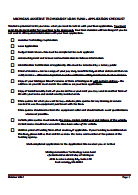
Michigan Assistive Technology Loan Fund Checklist and Application PDF
Michigan Business Development Program
The Michigan Business Development Program is an incentive program available to eligible businesses that create qualified new jobs and/or make qualified new investment in Michigan.
The jobs created as a result of this program can be ones held by workers with disabilities.
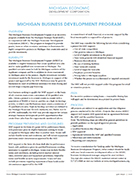
Michigan Business Development Program PDF
Michigan Chamber of Commerce
The mission of the Michigan Chamber of Commerce is to promote conditions favorable to job creation and business growth in Michigan. Its vision is to move Michigan forward through an economic, political and social system based on individual freedom, incentive, opportunity and responsibility.
Michigan Economic Development Corporation
For any company already in Michigan or considering a location in the state, the Michigan Economic Development Corporation offers one-stop business assistance. Its business development managers work with consultants, utilities, associations and local economic development agencies to best match businesses' needs with Michigan's opportunities. From attractive financing through our $2 billion 21st Century Jobs Fund to significant and long-term tax abatements, few places can offer a more attractive financial package. The Michigan Economic Development Corporation is also the channel for continuous improvement of the state's business climate.
Michigan Emerging Technologies Fund
The Michigan Emerging Technologies Fund is designed to expand funding opportunities for Michigan technology-based companies in the federal innovation research and development arena.
With this funding, a technology-based company could employ more scientists to conduct R&D research – including those who have disabilities.
Michigan Emerging Technologies Fund program guidelines.
Michigan Rehabilitation Services
Michigan Rehabilitation Services works with eligible customers and employers to achieve quality employment outcomes and independence for individuals with disabilities. Michigan Rehabilitation Services works in partnership with individuals with disabilities to prepare for and obtain competitive employment, including exploring the possibilities of self-employment or owning a small business. Employment services to individuals with disabilities are provided in all 83 Michigan counties.
Michigan Rehabilitation Services Office Locator
Choose a county on the Michigan map to obtain the contact information for the Michigan Rehabilitation Services Office in that county.
Michigan Venture Capital Association
The Michigan Venture Capital Association was established in 2002 to fulfill its mission: "to grow and sustain a vibrant venture capital community in Michigan."
Microsoft Accessibility Resource Center
A Microsoft Accessibility Resource Center provides expert consultation on assistive technology and accessibility features built into Microsoft products. Their specialists understand how disabilities impact computer users and are trained to evaluate the needs of the person with the disability. Some centers offer computer training and many organizations have lending libraries, so a consumer can try a product before purchasing it.
Opportunities for Businesses
Michigan Rehabilitation Services works with businesses to find and retain qualified workers with disabilities – helping employers save time and money. If you are a business owner, let Michigan Rehabilitation Services help you maintain a motivated, reliable and dependable workforce.
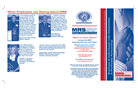
Business and people with Disabilities Brochure PDF
Taxable Bond Financing
The purpose of the program is to provide small-and medium-sized companies access to public capital markets normally available to larger companies. The principal advantage of using taxable bond financing is access to long-term (perhaps 10–20 years), fixed-rate or variable rate financing. Since banks generally consider a long-term loan to be five (5) years, the annual cash flow difference to a company utilizing taxable bonds can be considerable.
Since the IRS does not restrict the uses of taxable bond proceeds, they can be used finance the restoration of an office space to make it ADA compliant. Funds can also be used to purchase assistive technology to allow an employee with a disability to be more productive.
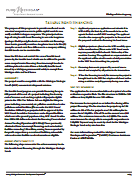
Tax Credits and Deductions to Assist with Workplace Accommodations
This document, published by Michigan Rehabilitation Services, has basic information on 2 provisions that the Internal Revenue Code has to assist businesses with the cost of providing workplace accommodations. Additionally, it provides contact information and links to helpful resources.
Tax-Credits-N-Deductions-to-Assist-w-Workplace-Accom PDF
Veterans’ Employment Services
The Workforce Development Agency's Veterans' Services Division provides program-specific services with eligibility requirements as defined by federal law. It offers a host of intensive services that focuses on the needs of eligible veterans and spouses, who are unable to obtain employment through the core services provided by Michigan Works Service Centers.
Workplace Accommodations and Ergonomics
Accommodations are changes or adjustments to a job or work environment that will enable a worker to perform the job. Types of accommodations include: making existing facilities readily accessible and usable; restructuring job duties or tasks; modifying work schedules; acquiring or modifying equipment or devices; providing readers or interpreters and modifying exams, training materials or policies.
This document has the contact information for the Accommodations Centers located in Michigan. These centers use a comprehensive team approach to design and provide accommodations and ergonomics for specific employer needs.
Workplace Accommodations Ergonomics PDF
