
Massachusetts Tax Incentives
What to do when the Affordable Care Act (ACA) Impacts Case Settlements:
The Benefits of an Accessibility-Focused Case Evaluation
A White Paper by Michael Fiore
One of the likely unintended consequences of the Affordable Care Act (ACA) is that Special Need Trusts (SNT’s) may be impacted due to settlement criteria that can be based on past, present, and future medical needs.
Teleseminars on Disability, Diversity, and the Changing Workforce. One hour of learning that can change the way that you think.
Tech Update: Read an article about the implications of 32-bit and 64-bit processors for Assistive Technology Solutions.
Looking for qualified candidates with disabilities?

A Job Board for job seekers with disabilities and the businesses looking to hire them.
Massachusetts Tax Incentives
Page Contents
- Apprenticeships
- Assistive Technology Loan Program
- Assistive Technology Program
- Borrowing or Acquiring Used Assistive Technology (AT) or Durable Medical Equipment
- Demonstration Centers for Assistive Technology
- Disability Law Center
- Economic Development Incentive Program
- Funding Assistive Technology for Work
- Housing and Economic Development
- Massachusetts Growth Capital Corporation
- MassMatch’s Employers’ Section
- New England Assistive Technology Marketplace
- On-The-Job Training Funds
- Rehabilitation Technology
- VA Vocational Rehabilitation & Employment Services
- Veterans' Programs and Services
- Vocational Rehabilitation
- Workforce Training Fund Programs
Apprenticeships
The Apprentice Training Program provides an individual with the opportunity to acquire the skills, knowledge, and experience needed to succeed in one of 850 occupations. The program gives employers a chance to bring on talented, dedicated individuals who are committed to gaining the skills and experience that will make them a valuable asset to the company. Apprentice training programs typically include 2,000 hours of on-the-job training and 150 hours of related classroom instruction. Apprenticeship training varies according to trade, but generally ranges from one to five years.
The individual hired as an apprentice could be someone with a disability who wants to acquire skills and knowledge needed to succeed in a specific trade.
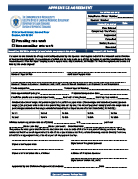
Apprenticeship Agreement Form PDF
Assistive Technology Loan Program
The Massachusetts Assistive Technology Loan Program, operated by Easter Seals Massachusetts, gives people with disabilities and their employers access to low-interest cash loans so they can buy Assistive Technology devices. The program offers better interest rates than a traditional bank loan, and repayment lengths are based on the expected useful life of the device.
Since Assistive Technology tends to increase a disabled employee’s productivity, it is wise for an employer to invest in Assistive Technology utilizing these loans.

Massachusetts Assistive Technology Loan Program brochure - PDF
Assistive Technology Program
The Assistive Technology Program enables individuals with severe disabilities the ability to access assistive technology devices and training. Assistive technology (AT) is any device that helps to maximize an individual’s independence, especially in a workplace setting.
The Assistive Technology Program is part of Massachusetts Rehabilitation Commission’s Community Services Program. Three organizations (MA Easter Seals, United Cerebral Palsy of Berkshire County and CLASS, Inc.) are contracted to do the purchasing, equipment set-up, training and follow-up for this program.
It should be noted that individuals seeking Assistive Technology for vocational purposes will be referred to a vocational rehabilitation agency for assistance. However, this program could possibly serve as an alternative, if the individual’s Assistive Technology needs aren’t adequately met by Vocational Rehabilitation.
Borrowing or Acquiring Used Assistive Technology (AT) or Durable Medical Equipment
Massachusetts has a range of programs serving persons with disabilities who need access to affordable equipment. Short-term device loan programs allow individuals to 'test drive' assistive technology (AT) before deciding what to buy.
Demonstration Centers for Assistive Technology
Assistive Technology Demonstration Centers provide a place where people with disabilities can see, learn about, and sometimes try out the latest AT.
Disability Law Center (DLC)
The Disability Law Center (DLC) is the Protection and Advocacy agency for Massachusetts. DLC is a private, non-profit organization responsible for providing protection and advocacy for the rights of Massachusetts residents with disabilities. DLC receives federal, state and private funding but is not part of the state or federal government. The DLC can provide information, referral, technical assistance and representation regarding legal rights and services for people with disabilities.
Economic Development Incentive Program (EDIP)
The Economic Development Incentive Program is a tax incentive program designed to foster job creation and stimulate business growth throughout the Commonwealth. Participating companies may receive state and local tax incentives in exchange for job creation, manufacturing job retention and private investment commitments.
Some of the jobs created as a result of this program could be occupied by workers with disabilities.
Funding Assistive Technology for Work
The Funding Assistive Technology for Work page has information and links on funding assistive technology for the workplace through state, federal, and/or private sources.
Housing and Economic Development
The Housing and Economic Development site has news, information and links pertaining to operating a business in Massachusetts.
MassMatch’s Employers’ Section
The MassMatch’s Employers’ Section has useful information and links for any employer who wants to accommodate an employee with a disability.
Massachusetts Growth Capital Corporation
The Mission of the Massachusetts Growth Capital Corporation is to create and preserve jobs at small businesses, women and minority owned businesses, and to promote economic development in underserved, gateway municipalities and low and moderate income communities.
The jobs created or preserved by the corporation could be ones held by workers with disabilities.
New England Assistive Technology Marketplace (NEAT)
The New England Assistive Technology Marketplace (NEAT) Center at Oak Hill enriches lives by enhancing independence and quality of life for people with disabilities including visual impairments. It sets the standard in providing innovative solutions, program excellence, services and advocacy for people with disabilities. It is a place to learn about products, equipment and services that assist people with day-to-day activities.
On-The-Job Training Funds
This is a program offered by the Massachusetts Rehabilitation Commission that reimburses the salary of an employee during an on-site training period known as an On-The-Job-Training fee.
The prospective employees who receive this training with these funds can be individuals with disabilities. Often, job training or a skills upgrade is needed for someone with a disability to find and maintain a job. Job training provided by these funds could update employment skills for many people with disabilities and help them succeed in their careers. These funds can pay an employer for a portion of the salary paid to an eligible person with a disability.
Rehabilitation Technology
Rehabilitation technology is the application of technology to meet the needs of people with disabilities, especially in the workplace. Its goal is to eliminate barriers and increase functional capacity for more opportunities in education and employment. Assistive technology and other enhancements are used in the rehabilitation technology field. A person with a disability seeking Rehabilitation Technology for vocational purposes can apply to a Vocational Rehabilitation agency for assistance.
VA Vocational Rehabilitation & Employment Services
The U.S. Department of Veterans Affairs (VA) Vocational Rehabilitation and Employment (VR&E) Service is vested with delivering timely, effective vocational rehabilitation services to veterans with service-connected disabilities. To receive services, a veteran must be found both eligible and entitled. The outcome of these services lead to suitable employment that is consistent with their aptitudes and interests, or achieving independence in their daily living.
Veterans' Programs and Services
Dedicated veterans' representatives help veterans transition to civilian work by developing a comprehensive job and training plan.
The Veteran's Programs and Services website also has links to programs that will assist vets with obtaining employment.
Vocational Rehabilitation (VR)
VR helps adults with various types of disabilities obtain and keep gainful employment. To achieve this goal, different types of support services – including job training - are offered to VR’s clients and their employers. These services are meant to eliminate any barriers that may prevent a person with a disability from working. Additionally, VR has close business relationships with local industries allowing clients to network for possible employment opportunities.
Vocational Rehabilitation Area Offices
Workforce Training Fund Programs
The purpose of the Workforce Training Fund Programs (WTFP) is to provide resources to Massachusetts businesses and workers to train current and newly hired employees.
The workers who receive the training from this program could be ones who have disabilities.
